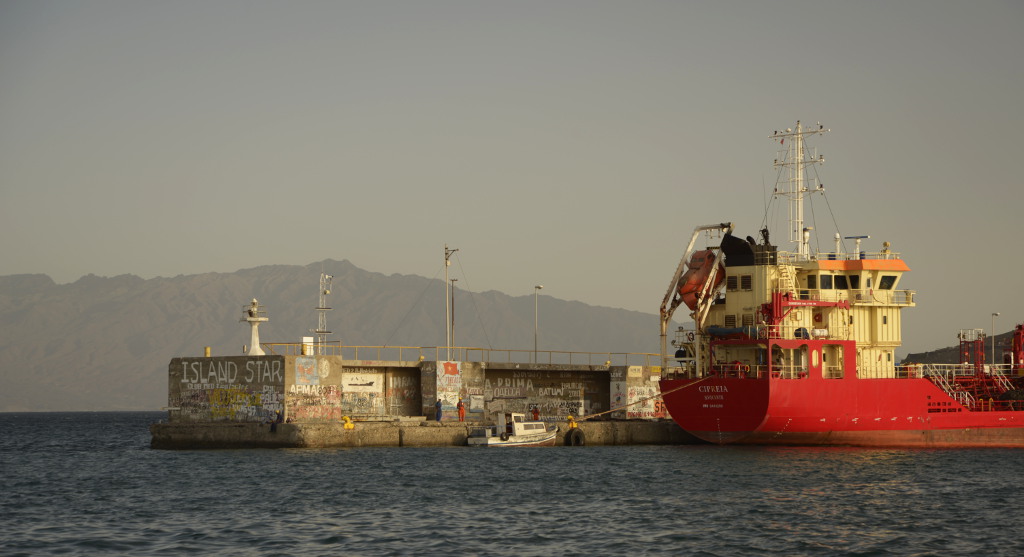
Land! Land! Land Ho!...or rather adios land, see you in two weeks. I was neither apprehensive nor excited to cross the Atlantic Ocean to the new world. How could I be so void of any feelings or emotions as we were ready to embark on such an epic adventure? I guess I'm more Japanese than I thought...or I just didn't realize what I was getting myself into.
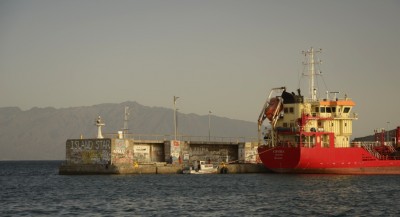
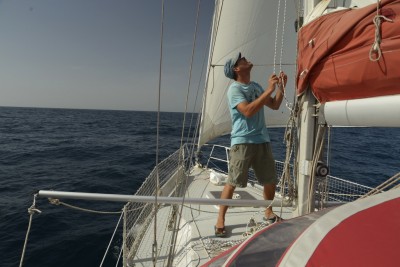
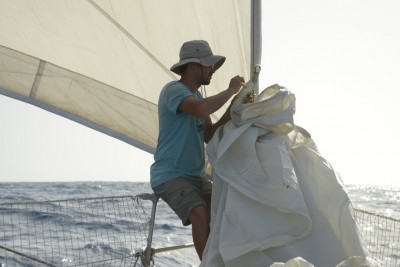
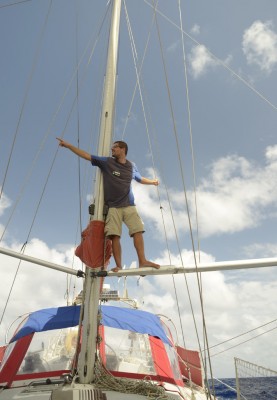
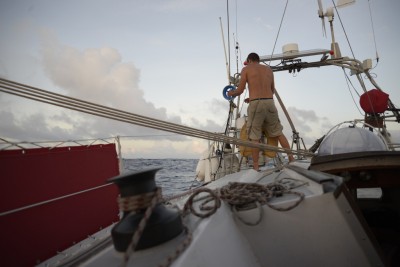
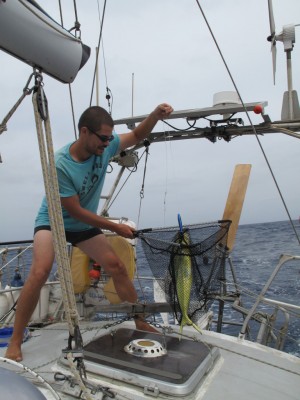
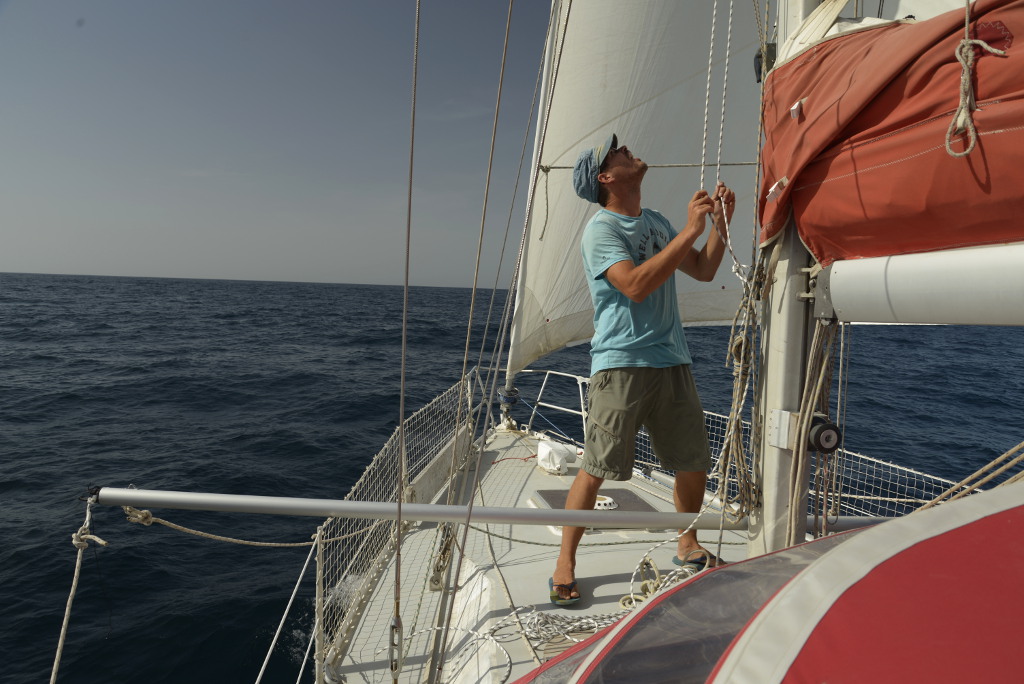
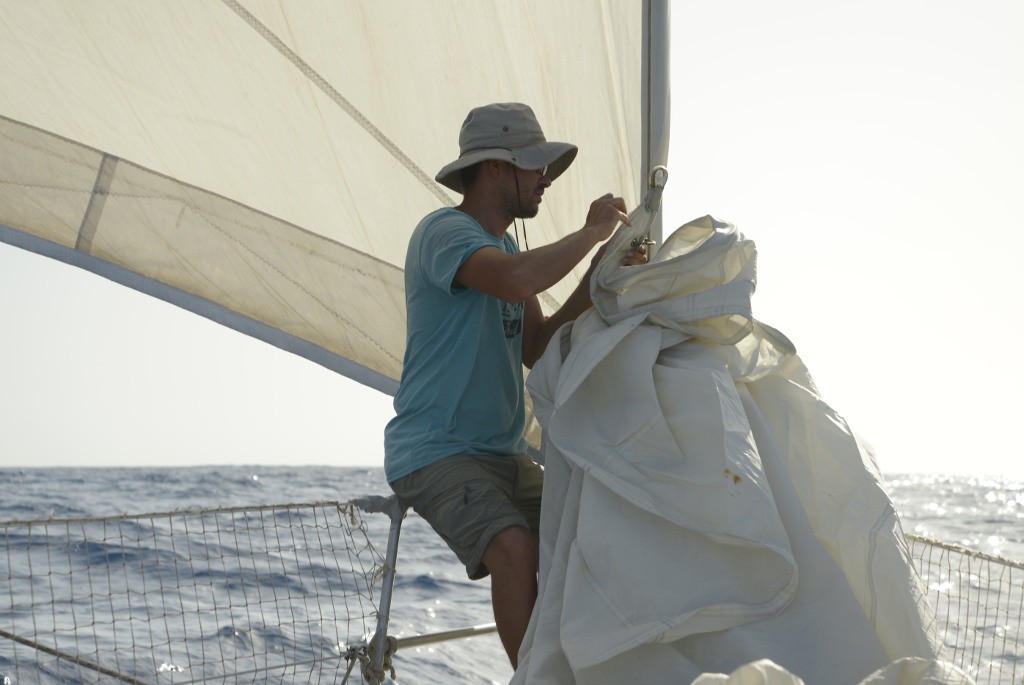
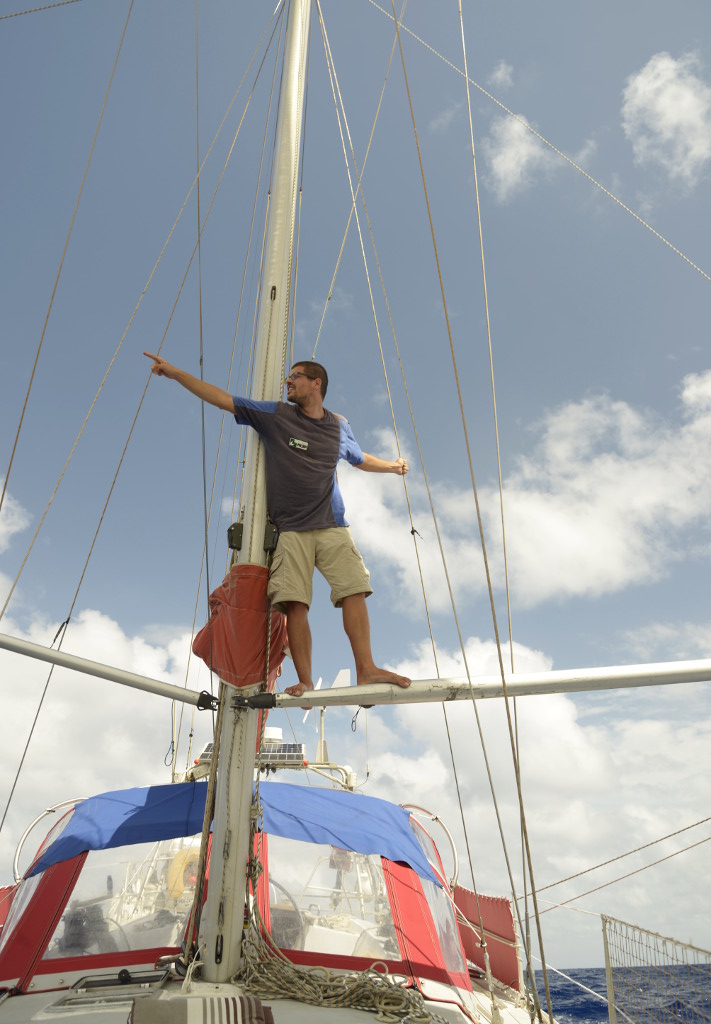
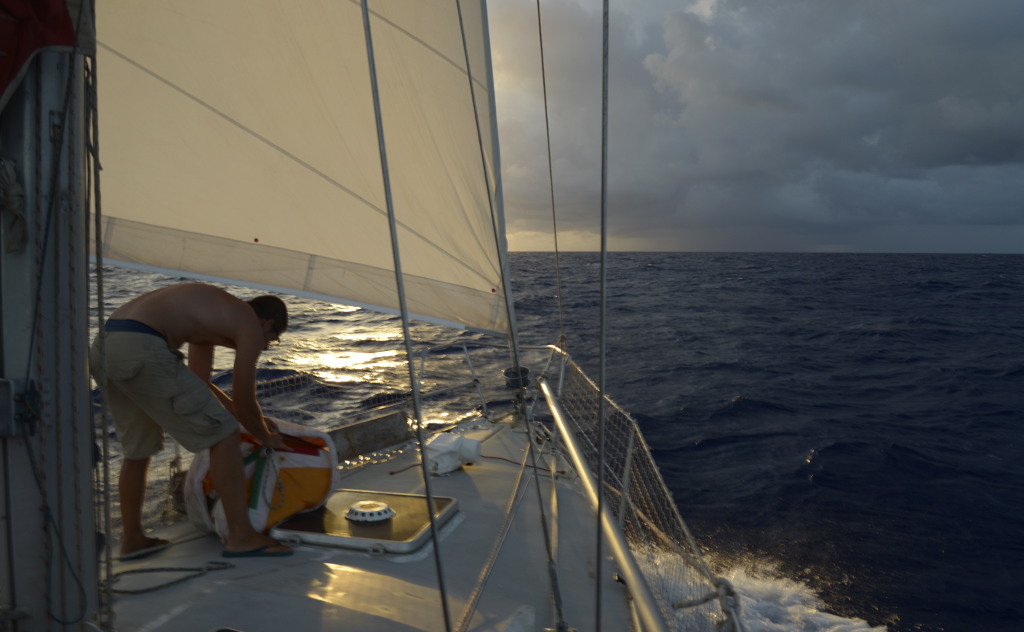
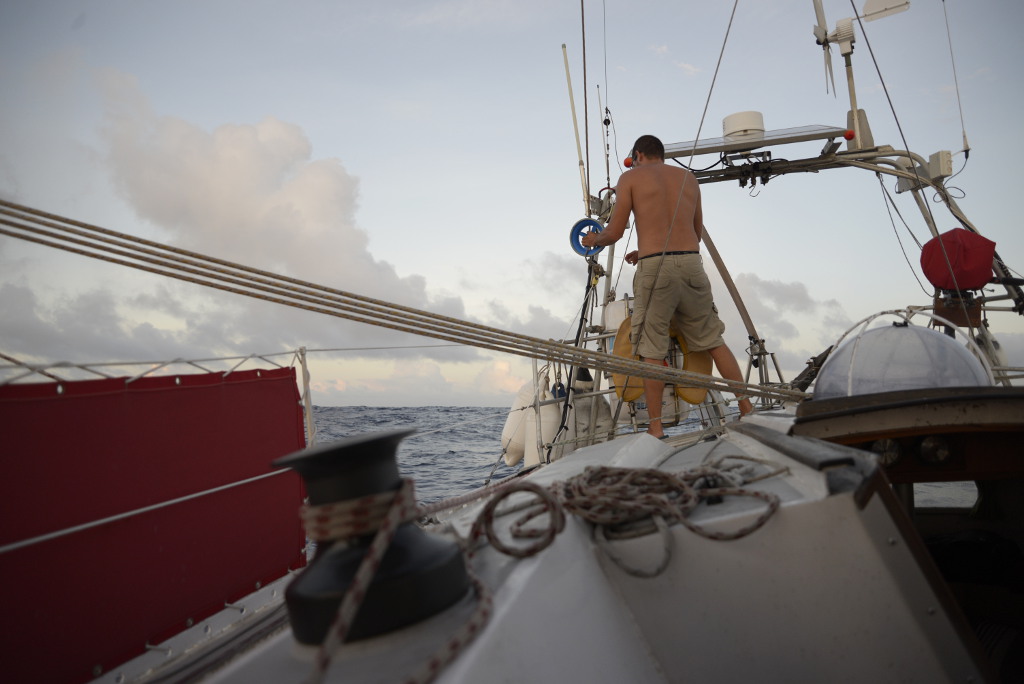
Leaving MindeloPaul setting up the spinnaker pole
The start of our adventure didn't go according to plan. I started the engine and when Paul had nearly got the anchor on board the engine died. The anchor was lifted and we were drifting towards a French catamaran just behind us. I yelled to Paul that the engine wouldn't turn back on and with his quick instincts he dropped anchor. I hoped this wasn't a preview for the Atlantic crossing.
During our preparations for the crossing Paul changed the gas filter, so the engine shut down because of air in the filter...nothing major. I started the engine up again and she worked perfectly. OK, attempt numero two was successful and we received a warm send off from the French catamaran. I think they were just happy we didn't drift into them.
When we left the bay in Mindelo, Sao Vincent and we had 15 kts of steady wind in our back. Shortly after, when we adjusted our course to French Guiana in South America and the wind died. The island of Santo Antão was blocking the wind and Arbutus started to roll terribly. It was beyond uncomfortable. So a few hours into day one we turned on the engine...maybe we should have filled our gas tanks before leaving. Luckily we only used the engine for 1.5 hours.
We kept our log book up to date with our position, course, speed, wind speed and direction etc and I also kept a personal log book.
Sundy's log book:
28 October
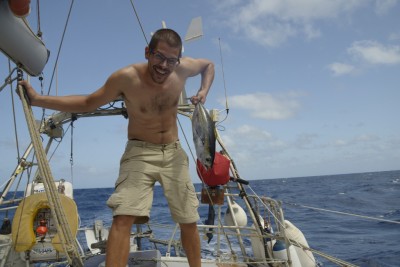
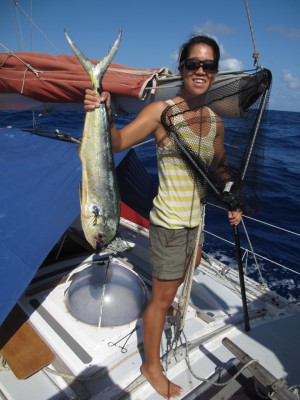
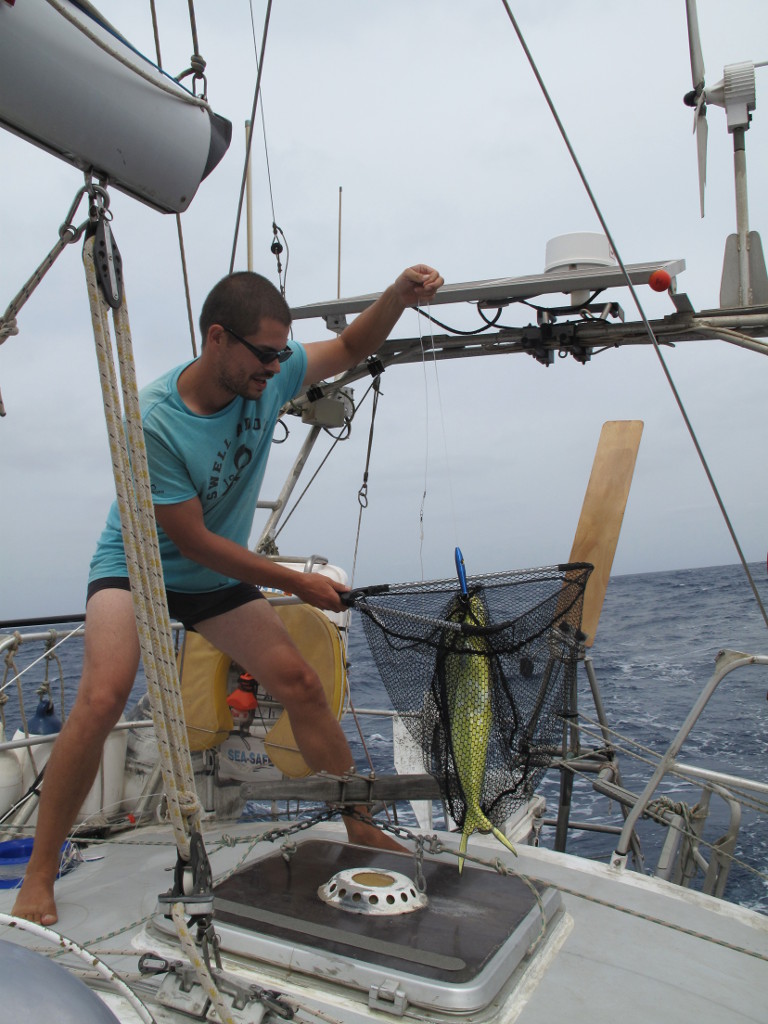
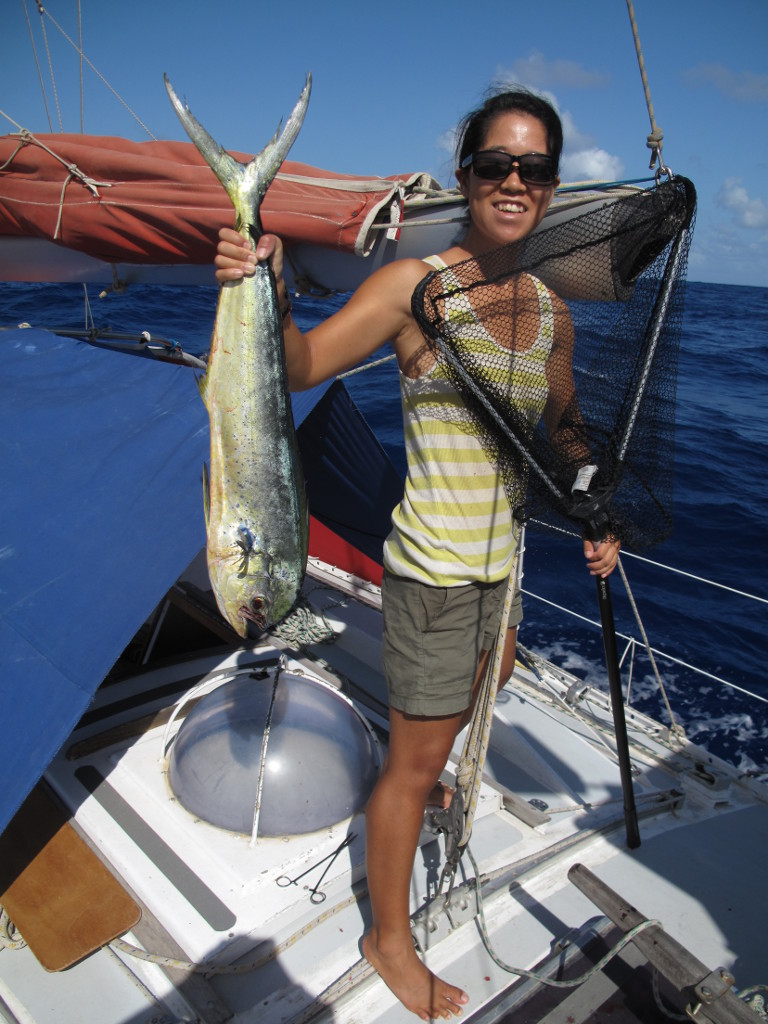
caught small mahi mahi just before lunch
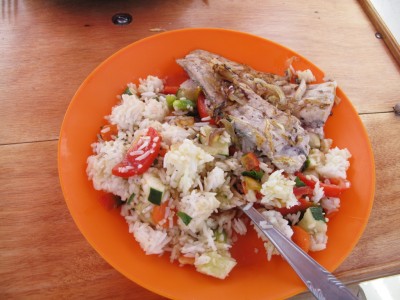
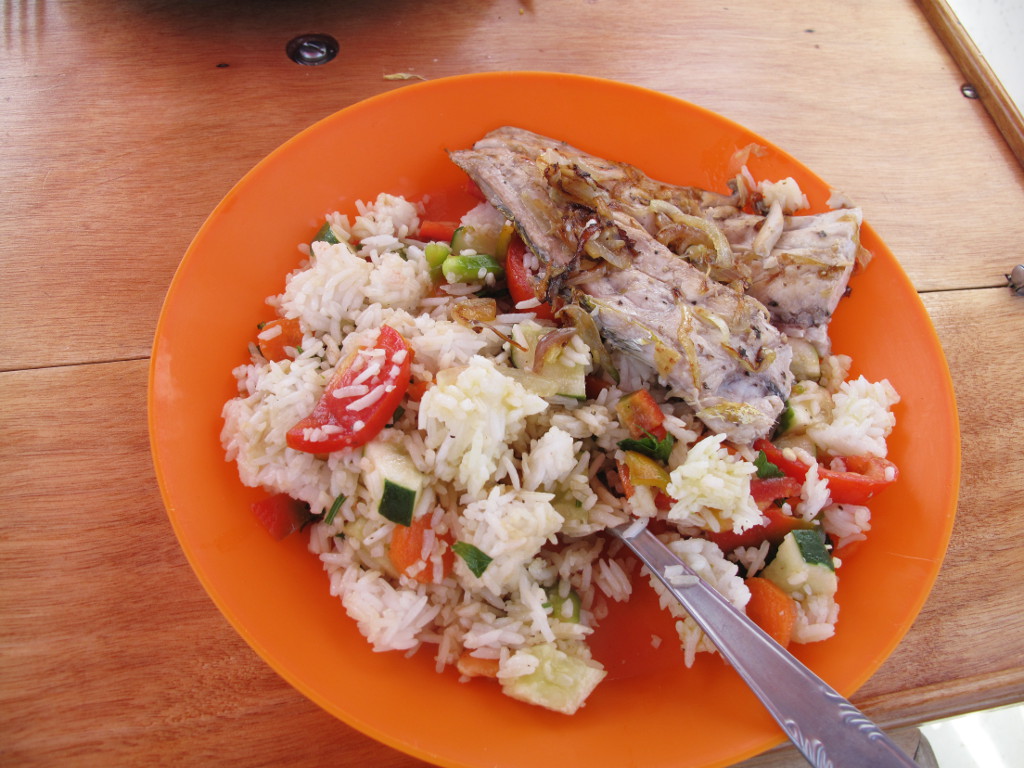
lunch: fish, rice, veg
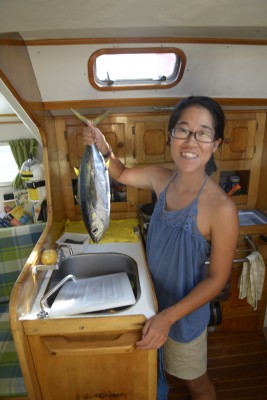
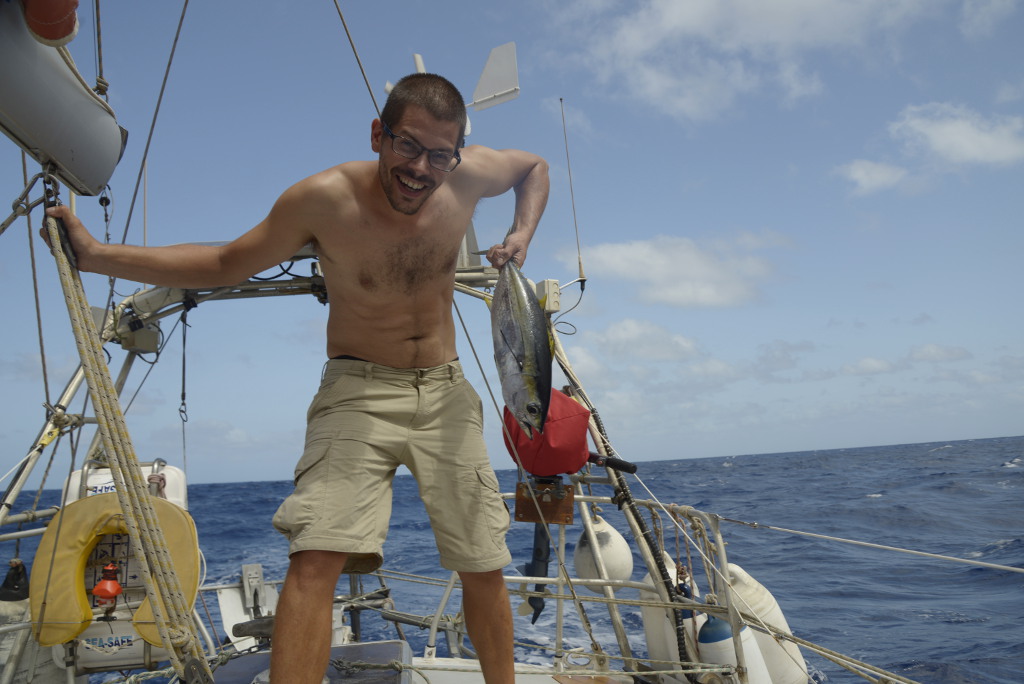
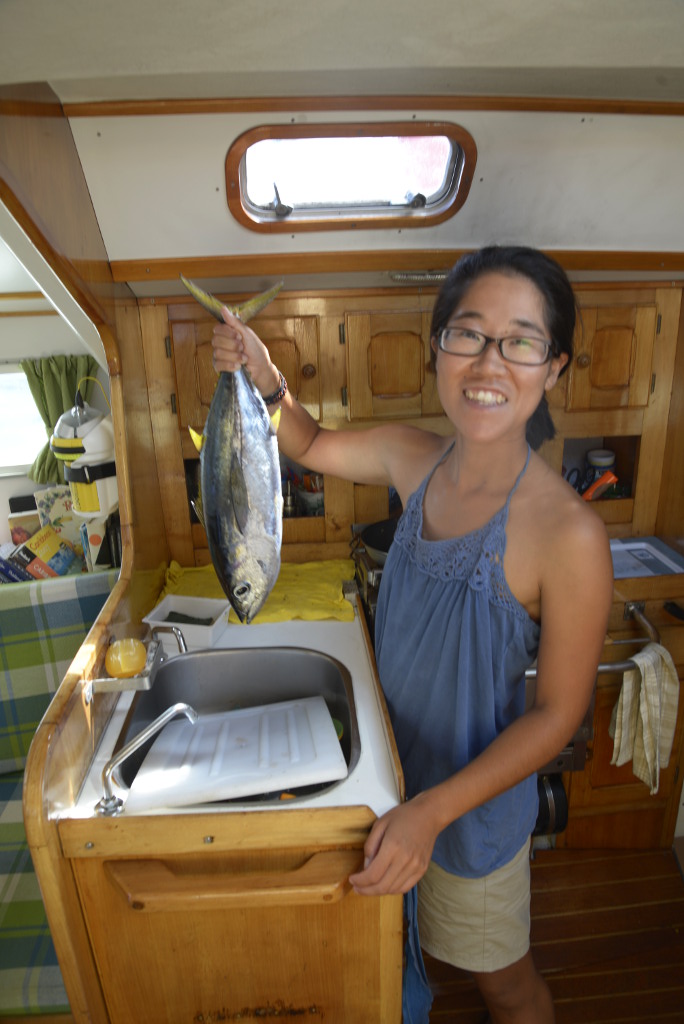
during lunch a tuna on each line! Caught small yellow fin tuna but lost the larger tuna
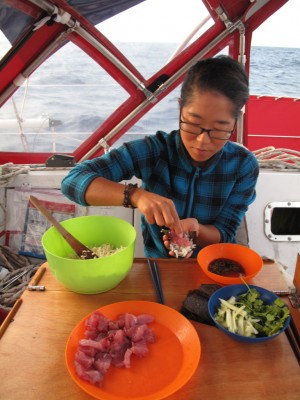
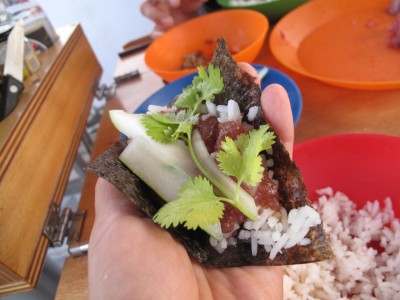
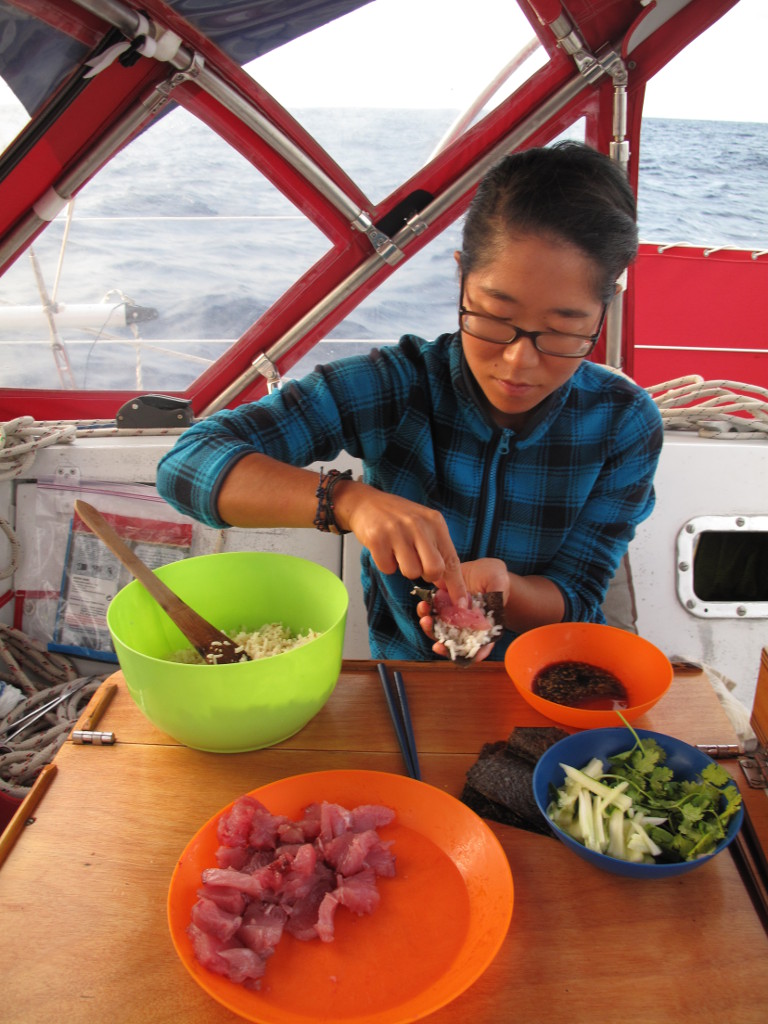
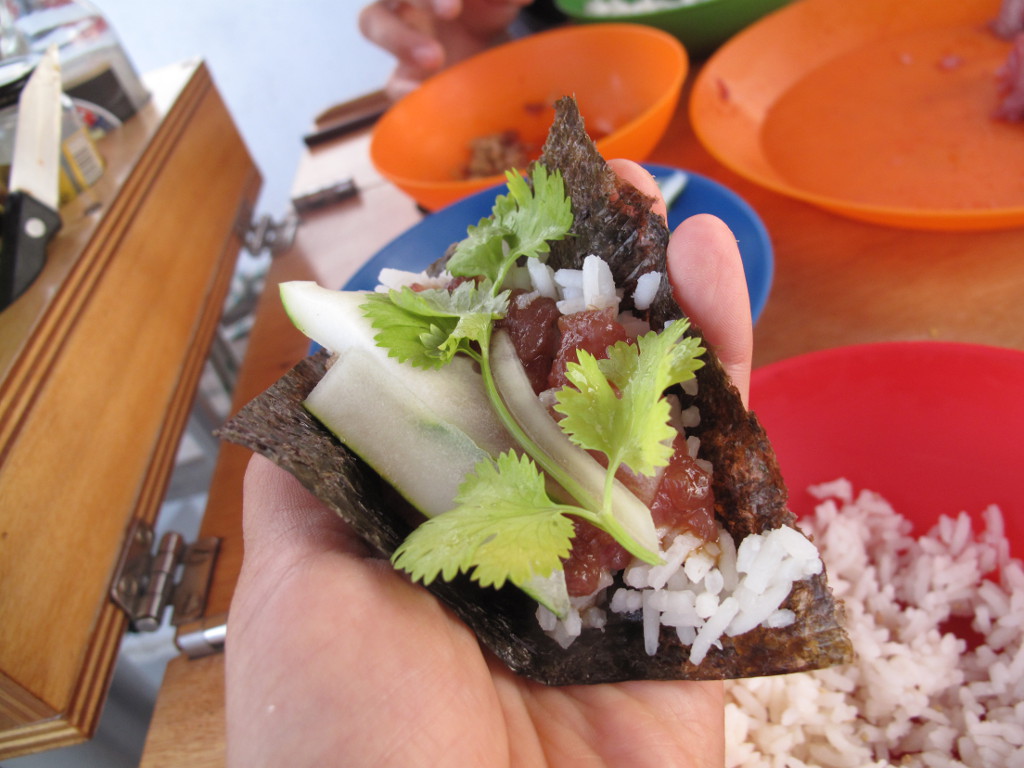
dinner: SUSHI made with sushi rice, tuna sashimi, cucumber, parsley
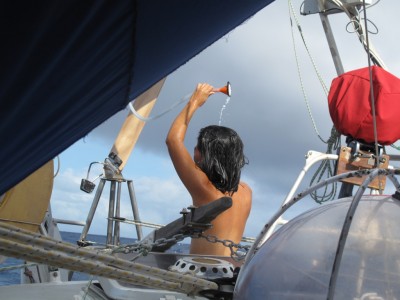
Paul took shower using ONLY fresh water because salt water was too cold for him
took sea sick pill and felt good for 1 hour
bad sleep, hot, rolling, back aching
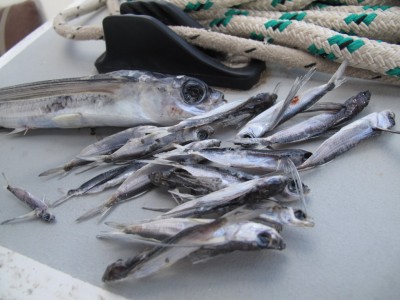
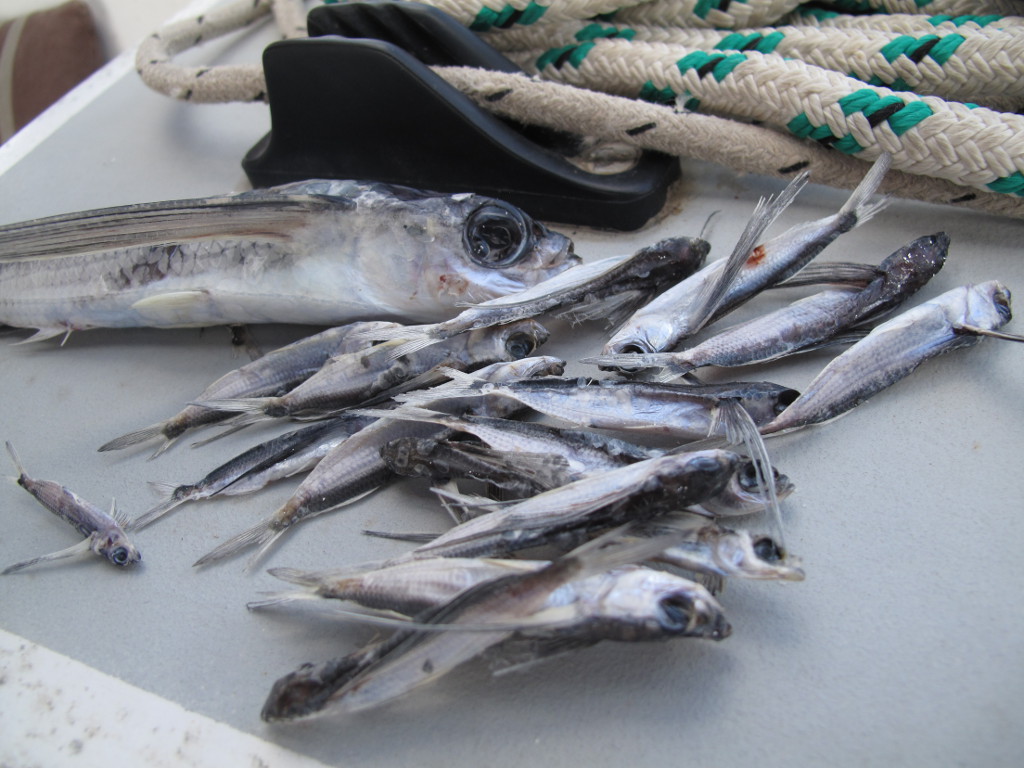
Wow it was such a moral booster to have fresh fish practically everyday. We were eating better at sea than on land. But there was a moment when it all ended because mid way there were islands of seaweed floating at the surface of the water. From then on we were only catching seaweed.
The crew's moral took a dip when the fish stopped jumping on the boat and all our fresh fruit and veg were going bad. We bought fresh bread in Mindelo but didn't get to the last loaf before it started growing a layer of mold.
DAY 8
Paul consults our world cruising guide and shortly after announces that we don't have time to visit French Guiana and that we need to be in Cartagena, Colombia before the trade winds start getting stronger. We would encounter much more challenging conditions off of Santa Marta, Colombia if we stayed too long in the Caribbean. I was annoyed at such a drastic change of plans but more annoyed that a Caribbean island land fall would elongate our trip...more days at sea.
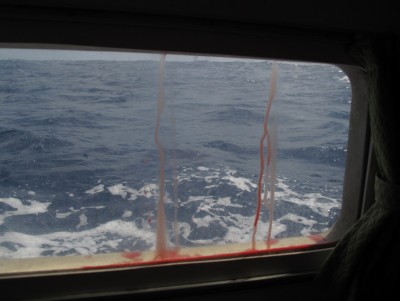
The same day we decided to change course we had a very misfortune accident. BANG!! oooooo a terrible eruption followed by a string of French swear words came from the cockpit. I was inside and stuck my head out to see the commotion. Immediately I didn't see anything so I yelled to Paul, “What happened”. “Look at the dodger's window”, he responded. I couldn't believe what I saw...I didn't say anything. My mouth just opened and I stared. The spinnaker pole and it's support went THROUGH the dodger's strataglass window. After inspection, all four of the rivet pops attaching the spinnaker pole support to the mast snapped.
It was our only major incident during the crossing and Paul was kicking himself because he thought he could have prevented the accident from happening by securing the end of the pole to the mast with rope. I just thought thank god we were not hurt.
I was depressed on day 14 because this was our expected arrival date in French Guiana...I only freaked out twice on the passage screaming at the top of my lungs in the cockpit, “I don't want to be here”. I think I unhinged Paul. My entire world was in constant motion and it was a such an effort just to get out of bed, cook, and go the washroom. One day I wanted to make red pepper humus and thought about how much effort this would take and if I would get even more seasick. I had to strategically prioritise what I needed to grab from inside and bring back into the cockpit to make this humus....It took me two hours just to work up the courage to grab the ingredients and utensils to make this humus.
I still get seasick. I will always be seasick. Many sailors have told me that after three days at sea your body adapts and you are no longer seasick. After 17 days, when we were anchoring in St. Lucia, I was still waiting for the liberating moment.
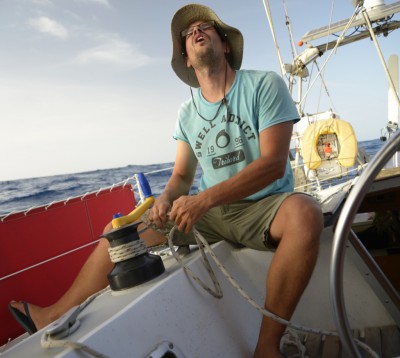
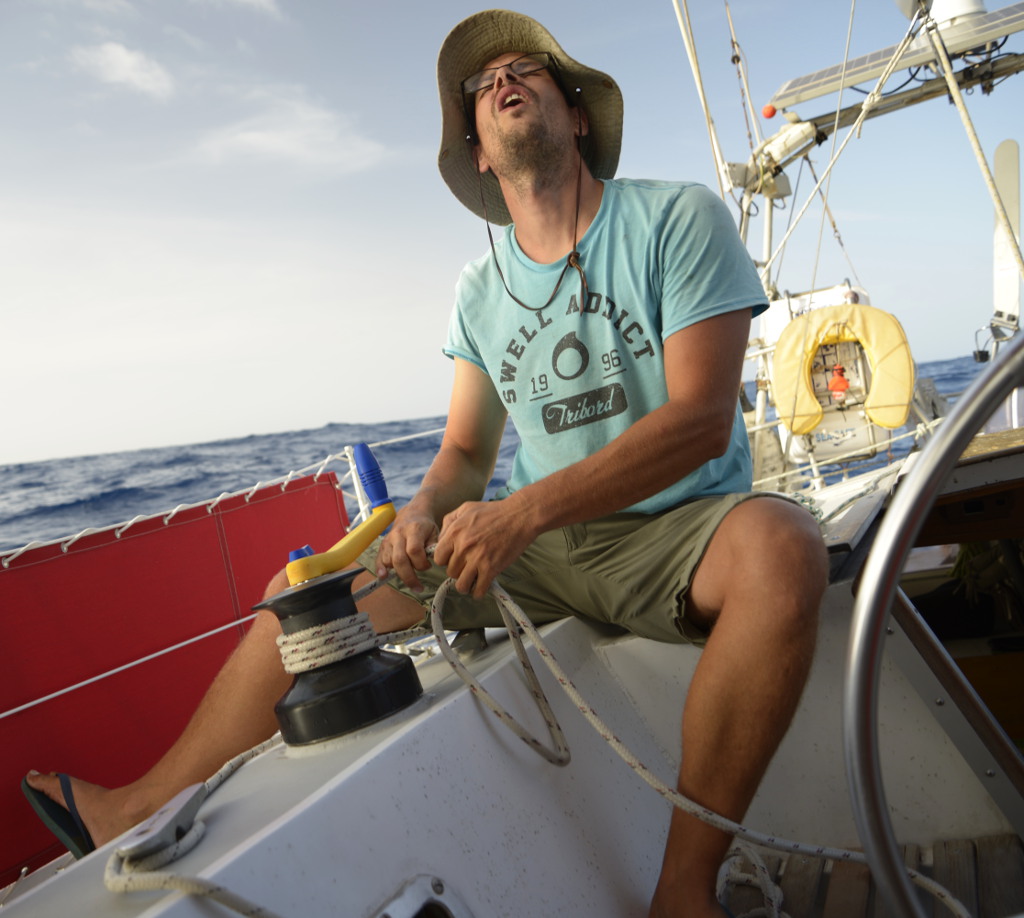
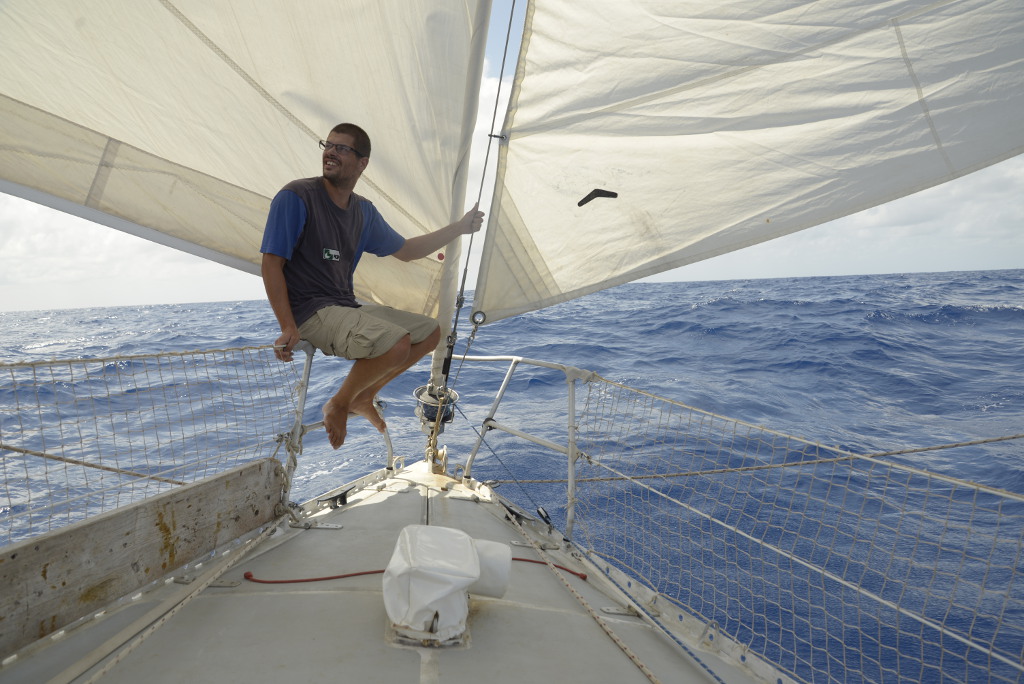
I was tremendously thankful that sailing the boat was not that difficult. We were in the trade winds with 12 knots of wind from the NE and only had to trim the sails. Only the last two days were difficult when we encountered many squalls. Large black rain clouds approached us from behind and we had 30-35 knots of wind. Paul had the bright idea to use our radar to warn us when the clouds were getting close. It worked like a dream, when the radar's alarm went off we saw the ominous grey clouds and reduced sail before the squall hit us. It was super annoying putting down and re-hoisting the sails with so many short squalls. We weren't used to so much physical activity.
We had one miserable day with 24 hours of rain, overcast, and squally conditions. I couldn't even hide under the dodger to keep dry because the wind and rain were entering the cockpit from the stern.
LAND! LAND! LAND!
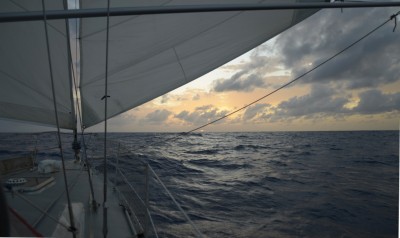
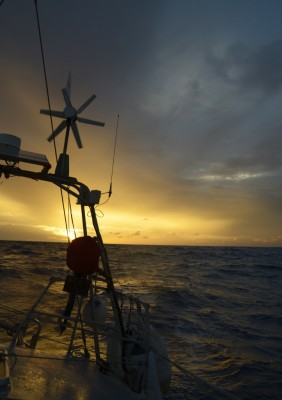
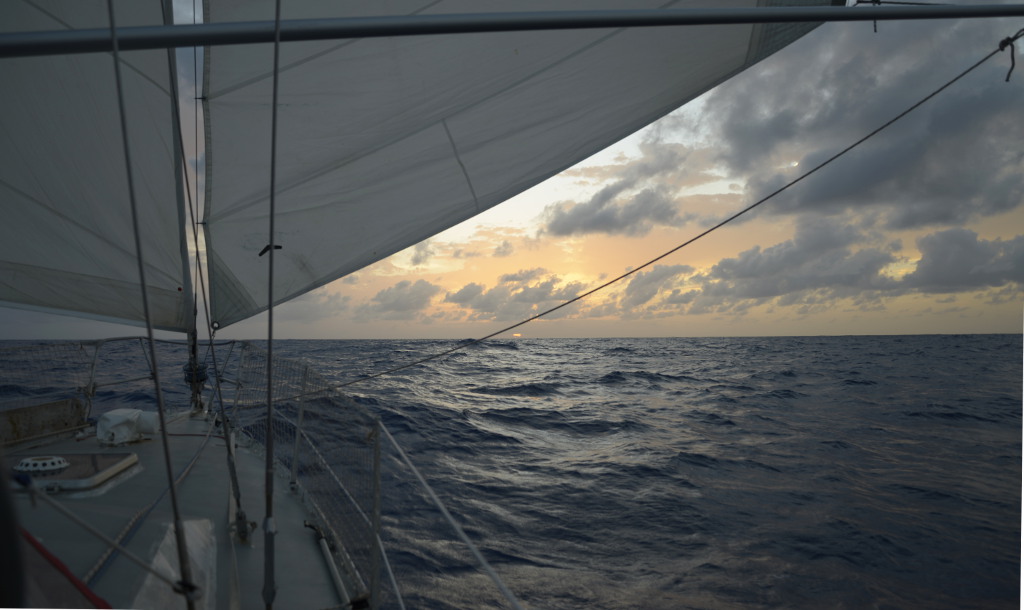
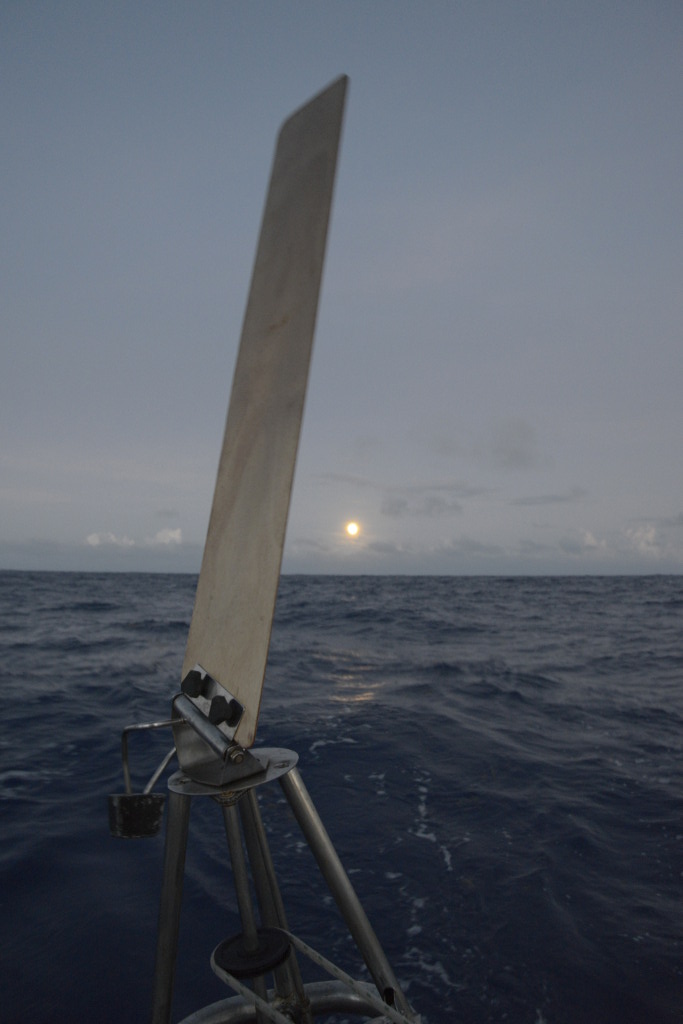
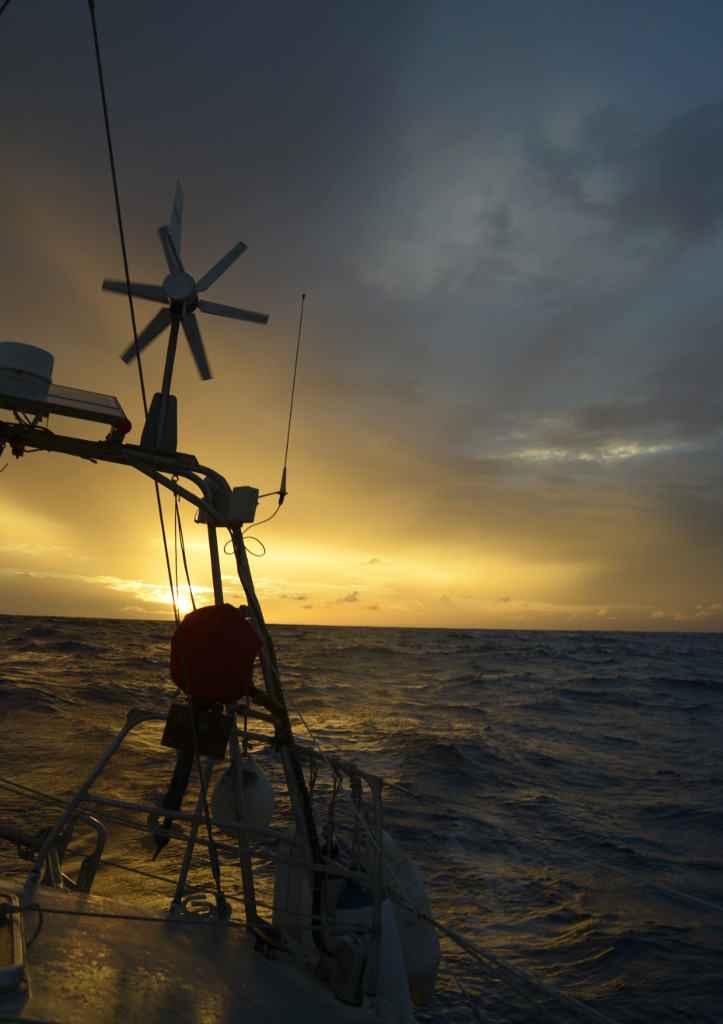
It was bittersweet seeing Barbados after 16 days at sea. We didn't want to pay the $50USD clearance fee so we continued to sail another night to St. Lucia. It was a beautiful sunset for the last night of our Atlantic crossing.
We decided to anchor at Soufrière in St. Lucia and approached the anchorage from the south. When we were on the leeward of the island we didn't have enough wind to make it to the anchorage, so for the last few miles of our crossing we used the engine. I was content with the magnificent sunrise and much anticipated landfall.
We did it! Arbutus and her crew successfully completed their first ocean crossing.
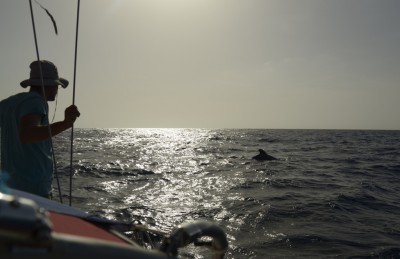
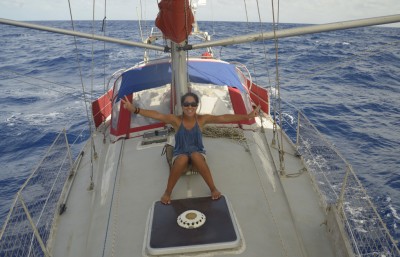
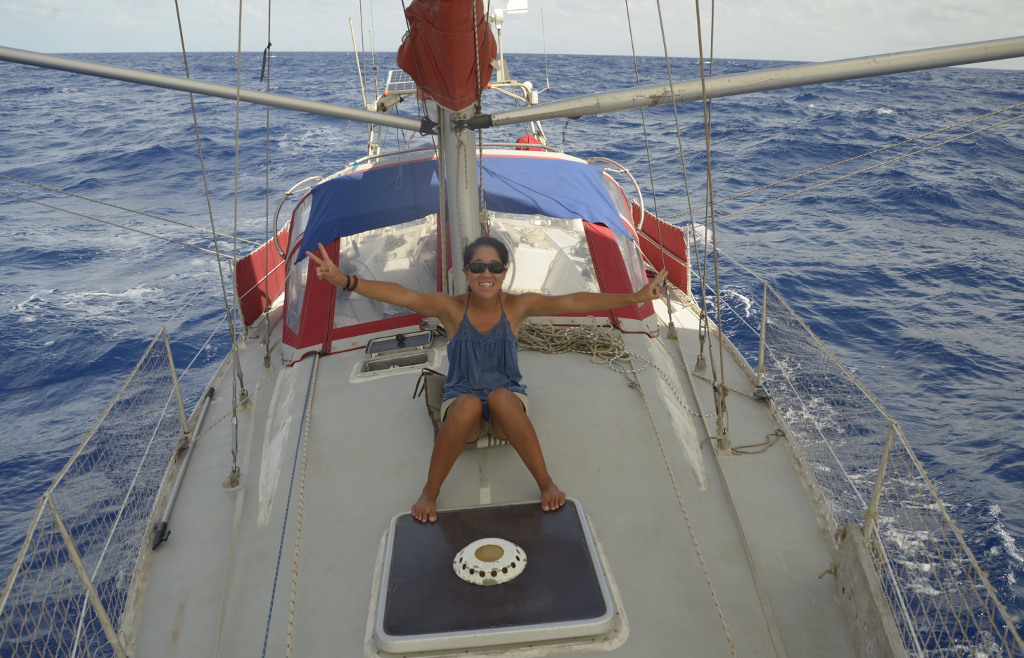
During such a long crossing you have so much time on your hands to think and reflect. I would catch myself staring into the horizon just reflecting on my past and future. Your mind is clear at sea with little distraction and I will even say my seasickness helped me be in such a meditative state. I couldn't read, be in front of the computer for too long, nor review my pictures. My world was so quiet and peaceful when I sat in the cockpit and stared into the horizon. I try to remind myself “look at where you are Sundy! Look at how much you have seen and experienced. Appreciate where you are”. How did I get so lucky?
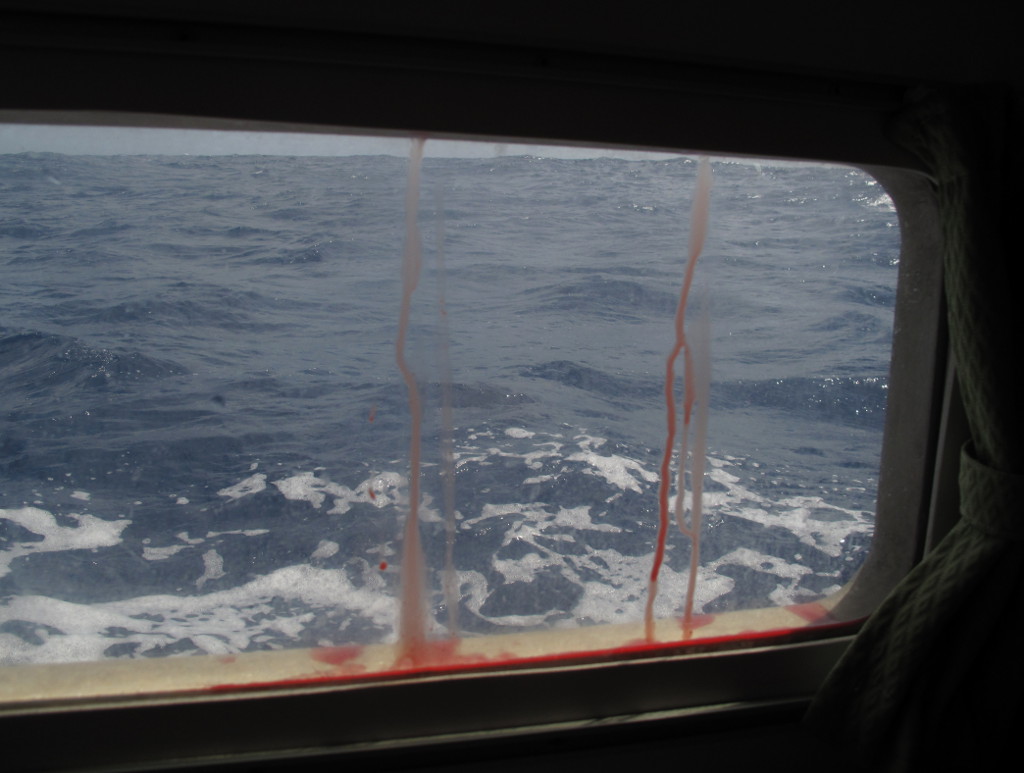
It's not human bloodcolourful sushi party
Paul wrote about these same days, in French, from his side of the boat. Read his account →

 The crew's moral took a dip when the fish stopped jumping on the boat and all our fresh fruit and veg were going bad. We bought fresh bread in Mindelo but didn't get to the last loaf before it started growing a layer of mold.
DAY 8
Paul consults our world cruising guide and shortly after announces that we don't have time to visit French Guiana and that we need to be in Cartagena, Colombia before the trade winds start getting stronger. We would encounter much more challenging conditions off of Santa Marta, Colombia if we stayed too long in the Caribbean. I was annoyed at such a drastic change of plans but more annoyed that a Caribbean island land fall would elongate our trip...more days at sea.
The same day we decided to change course we had a very misfortune accident. BANG!! oooooo a terrible eruption followed by a string of French swear words came from the cockpit. I was inside and stuck my head out to see the commotion. Immediately I didn't see anything so I yelled to Paul, “What happened”. “Look at the dodger's window”, he responded. I couldn't believe what I saw...I didn't say anything. My mouth just opened and I stared. The spinnaker pole and it's support went THROUGH the dodger's strataglass window. After inspection, all four of the rivet pops attaching the spinnaker pole support to the mast snapped.
It was our only major incident during the crossing and Paul was kicking himself because he thought he could have prevented the accident from happening by securing the end of the pole to the mast with rope. I just thought thank god we were not hurt.
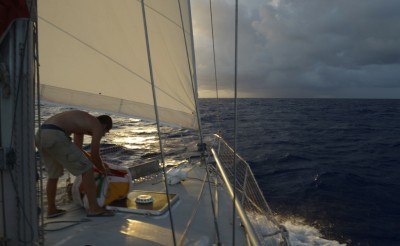
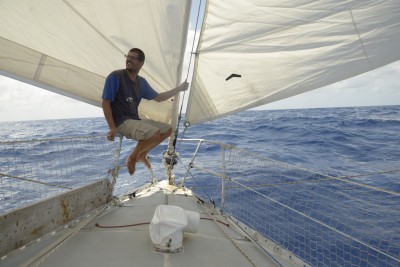
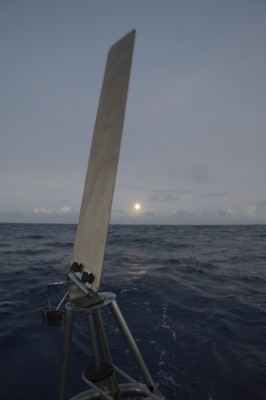
 I was depressed on day 14 because this was our expected arrival date in French Guiana...I only freaked out twice on the passage screaming at the top of my lungs in the cockpit, “I don't want to be here”. I think I unhinged Paul. My entire world was in constant motion and it was a such an effort just to get out of bed, cook, and go the washroom. One day I wanted to make red pepper humus and thought about how much effort this would take and if I would get even more seasick. I had to strategically prioritise what I needed to grab from inside and bring back into the cockpit to make this humus....It took me two hours just to work up the courage to grab the ingredients and utensils to make this humus.
I still get seasick. I will always be seasick. Many sailors have told me that after three days at sea your body adapts and you are no longer seasick. After 17 days, when we were anchoring in St. Lucia, I was still waiting for the liberating moment.
I was tremendously thankful that sailing the boat was not that difficult. We were in the trade winds with 12 knots of wind from the NE and only had to trim the sails. Only the last two days were difficult when we encountered many squalls. Large black rain clouds approached us from behind and we had 30-35 knots of wind. Paul had the bright idea to use our radar to warn us when the clouds were getting close. It worked like a dream, when the radar's alarm went off we saw the ominous grey clouds and reduced sail before the squall hit us. It was super annoying putting down and re-hoisting the sails with so many short squalls. We weren't used to so much physical activity.
We had one miserable day with 24 hours of rain, overcast, and squally conditions. I couldn't even hide under the dodger to keep dry because the wind and rain were entering the cockpit from the stern.
LAND! LAND! LAND!
It was bittersweet seeing Barbados after 16 days at sea. We didn't want to pay the $50USD clearance fee so we continued to sail another night to St. Lucia. It was a beautiful sunset for the last night of our Atlantic crossing.
We decided to anchor at Soufrière in St. Lucia and approached the anchorage from the south. When we were on the leeward of the island we didn't have enough wind to make it to the anchorage, so for the last few miles of our crossing we used the engine. I was content with the magnificent sunrise and much anticipated landfall.
We did it! Arbutus and her crew successfully completed their first ocean crossing.
During such a long crossing you have so much time on your hands to think and reflect. I would catch myself staring into the horizon just reflecting on my past and future. Your mind is clear at sea with little distraction and I will even say my seasickness helped me be in such a meditative state. I couldn't read, be in front of the computer for too long, nor review my pictures. My world was so quiet and peaceful when I sat in the cockpit and stared into the horizon. I try to remind myself “look at where you are Sundy! Look at how much you have seen and experienced. Appreciate where you are”. How did I get so lucky?
 The crew's moral took a dip when the fish stopped jumping on the boat and all our fresh fruit and veg were going bad. We bought fresh bread in Mindelo but didn't get to the last loaf before it started growing a layer of mold.
DAY 8
Paul consults our world cruising guide and shortly after announces that we don't have time to visit French Guiana and that we need to be in Cartagena, Colombia before the trade winds start getting stronger. We would encounter much more challenging conditions off of Santa Marta, Colombia if we stayed too long in the Caribbean. I was annoyed at such a drastic change of plans but more annoyed that a Caribbean island land fall would elongate our trip...more days at sea.
The same day we decided to change course we had a very misfortune accident. BANG!! oooooo a terrible eruption followed by a string of French swear words came from the cockpit. I was inside and stuck my head out to see the commotion. Immediately I didn't see anything so I yelled to Paul, “What happened”. “Look at the dodger's window”, he responded. I couldn't believe what I saw...I didn't say anything. My mouth just opened and I stared. The spinnaker pole and it's support went THROUGH the dodger's strataglass window. After inspection, all four of the rivet pops attaching the spinnaker pole support to the mast snapped.
It was our only major incident during the crossing and Paul was kicking himself because he thought he could have prevented the accident from happening by securing the end of the pole to the mast with rope. I just thought thank god we were not hurt.
 I was depressed on day 14 because this was our expected arrival date in French Guiana...I only freaked out twice on the passage screaming at the top of my lungs in the cockpit, “I don't want to be here”. I think I unhinged Paul. My entire world was in constant motion and it was a such an effort just to get out of bed, cook, and go the washroom. One day I wanted to make red pepper humus and thought about how much effort this would take and if I would get even more seasick. I had to strategically prioritise what I needed to grab from inside and bring back into the cockpit to make this humus....It took me two hours just to work up the courage to grab the ingredients and utensils to make this humus.
I still get seasick. I will always be seasick. Many sailors have told me that after three days at sea your body adapts and you are no longer seasick. After 17 days, when we were anchoring in St. Lucia, I was still waiting for the liberating moment.
I was tremendously thankful that sailing the boat was not that difficult. We were in the trade winds with 12 knots of wind from the NE and only had to trim the sails. Only the last two days were difficult when we encountered many squalls. Large black rain clouds approached us from behind and we had 30-35 knots of wind. Paul had the bright idea to use our radar to warn us when the clouds were getting close. It worked like a dream, when the radar's alarm went off we saw the ominous grey clouds and reduced sail before the squall hit us. It was super annoying putting down and re-hoisting the sails with so many short squalls. We weren't used to so much physical activity.
We had one miserable day with 24 hours of rain, overcast, and squally conditions. I couldn't even hide under the dodger to keep dry because the wind and rain were entering the cockpit from the stern.
LAND! LAND! LAND!
It was bittersweet seeing Barbados after 16 days at sea. We didn't want to pay the $50USD clearance fee so we continued to sail another night to St. Lucia. It was a beautiful sunset for the last night of our Atlantic crossing.
We decided to anchor at Soufrière in St. Lucia and approached the anchorage from the south. When we were on the leeward of the island we didn't have enough wind to make it to the anchorage, so for the last few miles of our crossing we used the engine. I was content with the magnificent sunrise and much anticipated landfall.
We did it! Arbutus and her crew successfully completed their first ocean crossing.
During such a long crossing you have so much time on your hands to think and reflect. I would catch myself staring into the horizon just reflecting on my past and future. Your mind is clear at sea with little distraction and I will even say my seasickness helped me be in such a meditative state. I couldn't read, be in front of the computer for too long, nor review my pictures. My world was so quiet and peaceful when I sat in the cockpit and stared into the horizon. I try to remind myself “look at where you are Sundy! Look at how much you have seen and experienced. Appreciate where you are”. How did I get so lucky?
Your messages
Original comments, kept as they were.